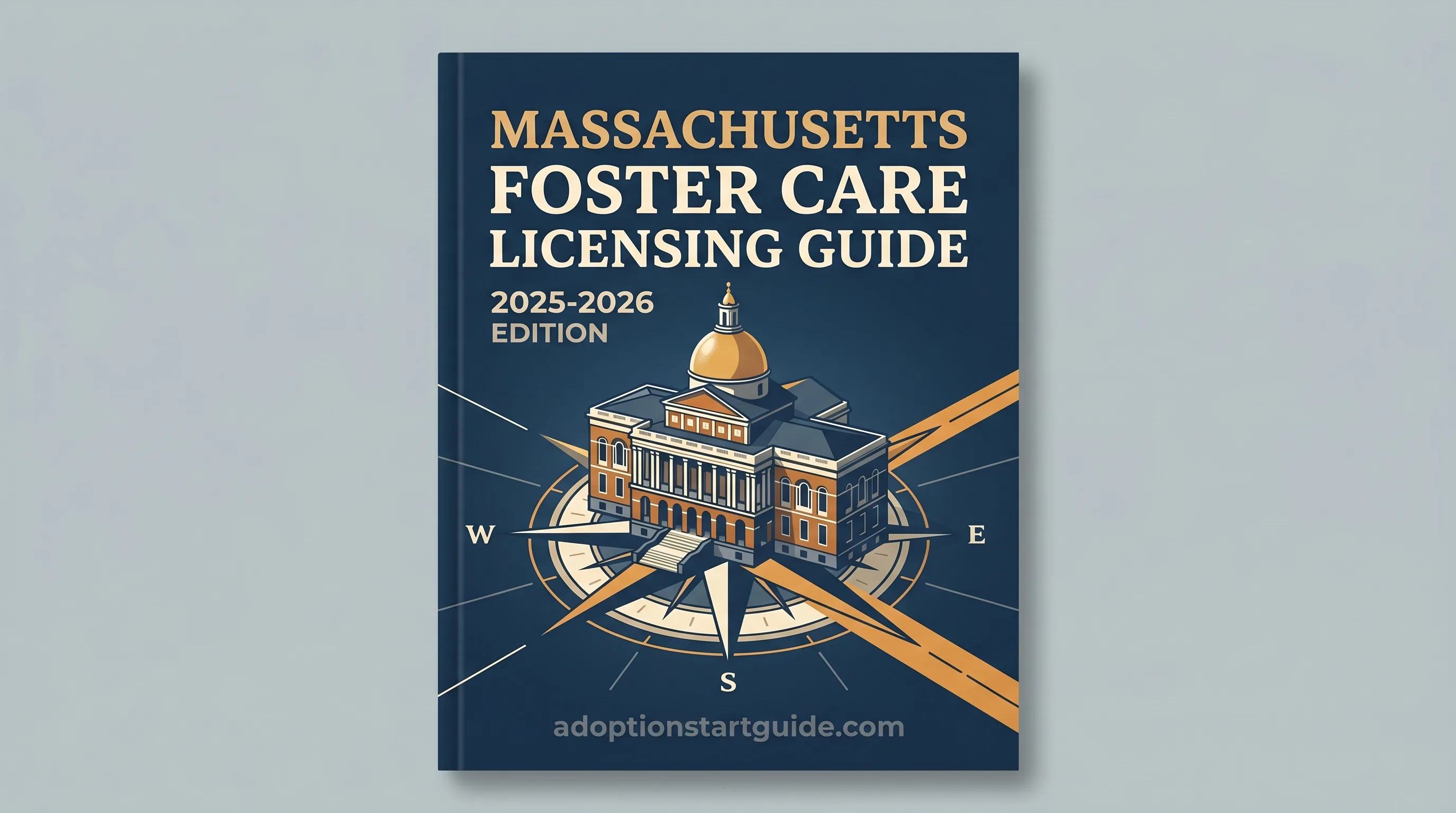
Massachusetts has 3,000 more children in state custody than licensed foster homes. You want to help. The state makes it strangely hard to figure out how.
The Department of Children and Families website gives you a phone number and a pamphlet. It does not explain which of the 29 area offices you should contact, or that the culture and wait times vary dramatically between the Boston office and the one in Greenfield. It does not mention that your MAPP pre-service training seats in Greater Boston fill within days of posting, while Western Mass sessions have openings months out. It does not tell you that the 1978 Lead Law could fail your home inspection before you even meet a social worker.
The books on Amazon are worse. They were written for a national audience and assume a generic licensing process that doesn't exist. Massachusetts runs its own system under 110 CMR 7.000 with its own Criminal Offender Record Information process, its own SORI registry, its own definition of who can and cannot be licensed. A guide written for Ohio will tell you to contact a private agency. Massachusetts doesn't use private licensing agencies for foster care — everything goes through DCF.
Private attorneys who specialize in DCF cases charge $500 or more for an initial consultation. Most prospective foster parents don't need a lawyer yet — they need someone to explain the system before the system explains itself. That's the gap this guide fills.
The Commonwealth Licensing System: Your Strategic Guide to Massachusetts Foster Care
This guide is built exclusively for Massachusetts. Every chapter, every checklist, every phone number is grounded in current DCF regulations (110 CMR 7.000), Massachusetts General Laws Chapter 119, and the real-world experience of families who have navigated this process in this state. It is not a repurposed national handbook. It is the operational layer that sits between what DCF tells you and what you actually need to know.
What's inside
- 29 DCF Area Office Navigator — Massachusetts is divided into 29 area offices, and which one you're assigned to shapes your entire experience. This chapter maps every office with contact information, geographic coverage, and practical insight into how caseload volume and regional culture affect your licensing timeline. Boston Metro offices process hundreds of applications per year. The Berkshires office knows you by name. The guide helps you understand what to expect from yours.
- CORI/SORI Walkthrough and Discretionary Waiver Strategy — Massachusetts requires Criminal Offender Record Information checks and Sex Offender Registry Information checks for every household member over 15. What most applicants don't know: a CORI hit doesn't automatically disqualify you. DCF has a discretionary waiver process for certain offenses, and most families never learn it exists. This chapter explains which records trigger automatic disqualification, which are eligible for waiver review, and how to present a waiver request that gets approved.
- MAPP Training Scheduling Strategy — The Massachusetts Approach to Partnerships in Parenting training is 30 hours of mandatory pre-service education. In Greater Boston, sessions fill almost immediately. In Western Mass and the Cape, scheduling is easier but sessions run less frequently. This chapter covers how to register, when the best windows open, what the 10-week curriculum actually covers, and how to handle the group exercises if you're a single applicant.
- Home Safety Standards and Lead Law Compliance — Massachusetts has the strictest lead paint law in the nation. If your home was built before 1978, you need a lead inspection certificate before DCF will approve your license. In a state where the median home age is 55 years, this affects the majority of applicants. The guide walks you through the 105 CMR 460 requirements, what a lead inspector actually checks, deleading options, interim control measures, and how to pass without gutting your house.
- Home Study Preparation — What your DCF social worker evaluates during the home study, how they score your responses, and the specific questions they ask about discipline philosophy, trauma awareness, and your support network. Includes the physical home requirements: bedroom specifications, smoke detectors, medication storage, pool barriers, and the firearm storage rules that trip up rural applicants.
- Kinship Care Fast-Track — When a child is removed from a home and a relative is available, Massachusetts allows emergency placement within 48 hours under kinship care provisions. But the expedited process still requires background checks, and the full licensing timeline catches up with you. This chapter explains how emergency kinship placement works, the difference between formal and informal kinship care, and why getting fully licensed matters even when the child is already in your home.
- Financial Support Breakdown — Massachusetts foster care reimbursement rates by age group, the clothing allowance, the specialized care rates for children with medical or behavioral needs, MassHealth coverage, the Adoption and Guardianship Assistance program, and the federal Adoption Tax Credit (up to $17,280 in 2025). Plus the expenses nobody warns you about: childcare gaps, transportation for visits, and the career disruption from court dates and team meetings.
- LGBTQ+ Protections and Affirming Policy — Massachusetts was the first state to allow same-sex couples to marry and actively recruits LGBTQ+ foster and adoptive parents. The guide covers the specific legal protections in place, how DCF's nondiscrimination policy works in practice, and what to expect during the home study if you're a same-sex couple or transgender applicant. No disclaimers, no hedging — Massachusetts is one of the most affirming states in the nation for LGBTQ+ families in the foster system.
- Young Adult Licensing — Massachusetts has the lowest minimum foster parent age in the country: 18. If you're a young adult who aged out of foster care yourself and wants to give back, or a 22-year-old couple who wants to foster before starting a biological family, this chapter addresses the specific questions DCF asks younger applicants and how to demonstrate stability without decades of life history to point to.
- Placement Types and Matching — Pre-adoptive, kinship, unrestricted, child-specific, and therapeutic foster care explained. How DCF's matching process works, what "disruption" means and how to prevent it, and the reality of concurrent planning in Massachusetts — fostering a child whose case goal may shift from reunification to adoption.
Printable standalone worksheets included
- Licensing Timeline Tracker — Every milestone from initial inquiry through approval with fill-in date fields. Print it, update it after every DCF contact, and always know where you stand.
- Home Safety Inspection Checklist — Room-by-room walkthrough of every physical requirement DCF checks, including lead paint status, smoke detectors, medication storage, and firearm rules. Walk your house with this before the social worker does.
- CORI/SORI Document Prep Sheet — Everything you need to gather for background checks, plus the waiver request framework if applicable. One page, no guesswork.
- Financial Planning Worksheet — Reimbursement rates, MassHealth coverage, tax credits, and hidden costs in one printable sheet. Take it to your household budget conversation.
Who this guide is for
- First-time prospective foster parents — You've thought about fostering for years. You finally called DCF or attended an information session. Now you need to understand what the next 6 to 12 months actually look like, step by step, in Massachusetts specifically.
- Kinship caregivers — A grandchild, niece, nephew, or family friend's child was removed by DCF and placed with you on an emergency basis. The child is already in your home. Now you need to get formally licensed, and the clock is running. This guide covers the expedited kinship pathway and why full licensing protects both you and the child.
- LGBTQ+ families — You know Massachusetts is affirming. You want to know exactly how the process works for same-sex couples and transgender individuals, without having to parse national guides that spend half their pages on states where your family structure is still contested.
- Young adults (18-25) — You aged out of foster care. Or you're a young couple who wants to foster before having biological children. Either way, you meet the age requirement but you're wondering how DCF evaluates younger applicants. This guide answers that directly.
- Homeowners in pre-1978 homes — You love your 1920s triple-decker in Somerville or your 1940s Cape in Worcester. You're worried the Lead Law will disqualify you. It probably won't, but you need to know exactly what to do before the home inspection. This guide gives you the playbook.
Why the free resources aren't enough
The DCF website lists the regulations. It does not tell you which regulations trip people up, which area offices are faster, or how to request a CORI waiver. It's a rulebook, not a strategy guide.
The national foster care books on Amazon describe a generic process that doesn't apply to Massachusetts. They'll tell you to contact a private agency — Massachusetts doesn't use them for foster care licensing. They'll describe a background check process that doesn't mention CORI or SORI. They'll skip the Lead Law entirely because only Massachusetts and a handful of other states enforce it at this level.
Etsy foster parent binders are beautifully organized. They give you places to file documents. They don't tell you which documents you need, what order to get them, or what to do when one of them comes back with a problem.
Facebook groups and Reddit threads give you anecdotes and emotional support. They can't give you the CORI waiver strategy, the area office comparison, or the lead compliance pathway. Anecdotes tell you the process is confusing. This guide makes it not confusing.
The free Quick-Start Checklist
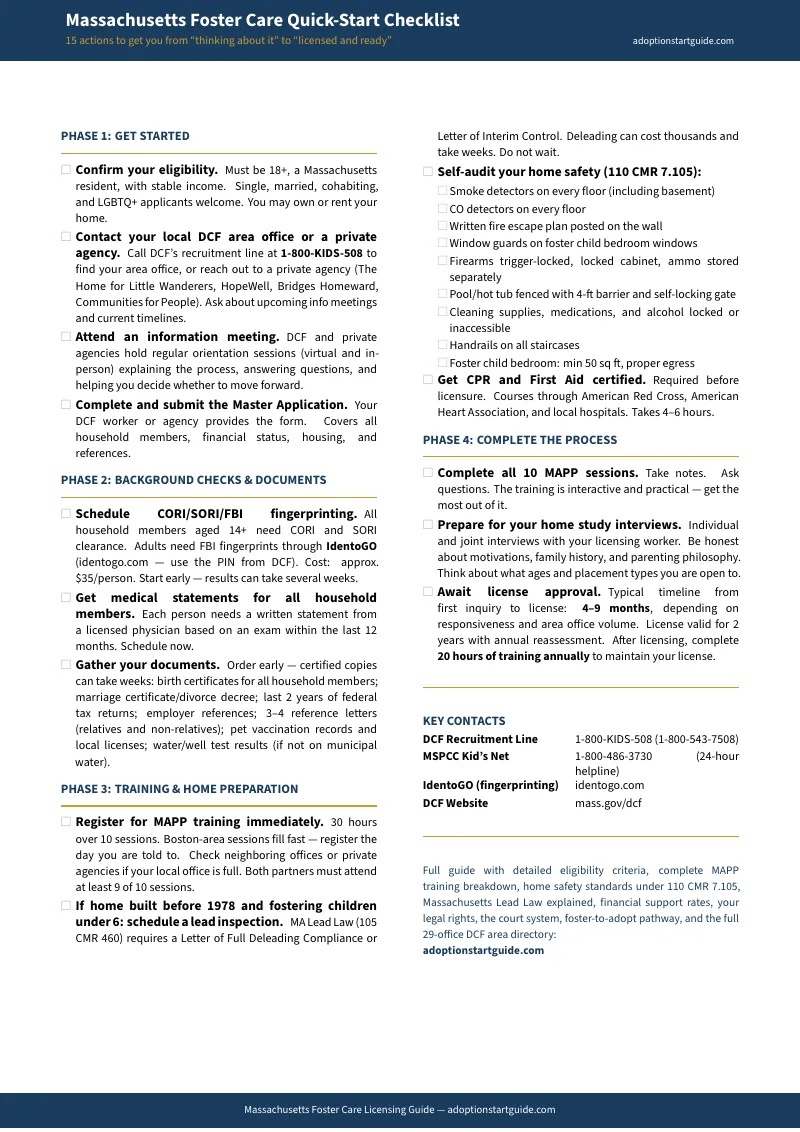
Download the Massachusetts Foster Care Quick-Start Checklist for a one-page overview of the key steps from initial inquiry through licensing approval. Free, no commitment. If you want the full guide with CORI strategy, MAPP scheduling, home safety details, Lead Law compliance, financial support breakdown, and printable worksheets, click the button in the sidebar.
— less than 20 minutes of a DCF attorney's time
A single consultation with a private attorney who handles DCF cases in Massachusetts starts at $500. Most prospective foster parents spend the first session covering foundational questions about background checks, home requirements, and the licensing timeline. This guide doesn't replace legal counsel. It makes sure you don't pay a lawyer to explain the basics.
If the guide doesn't deliver, reply to your download email at any time for a full refund. No forms. No justification required.